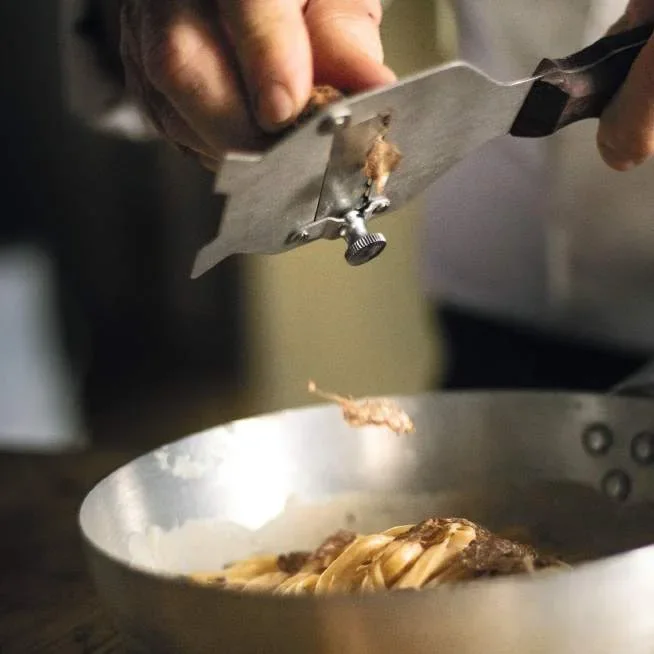
A truffle reaches the table as a concentrated ingredient. Shaving it takes seconds and makes visible the end of a much longer journey. To understand that journey, it is worth returning to the woodland and the people who have learned to recognise what the ground offers. The plate holds part of the story; the search brings us closer to the rest.
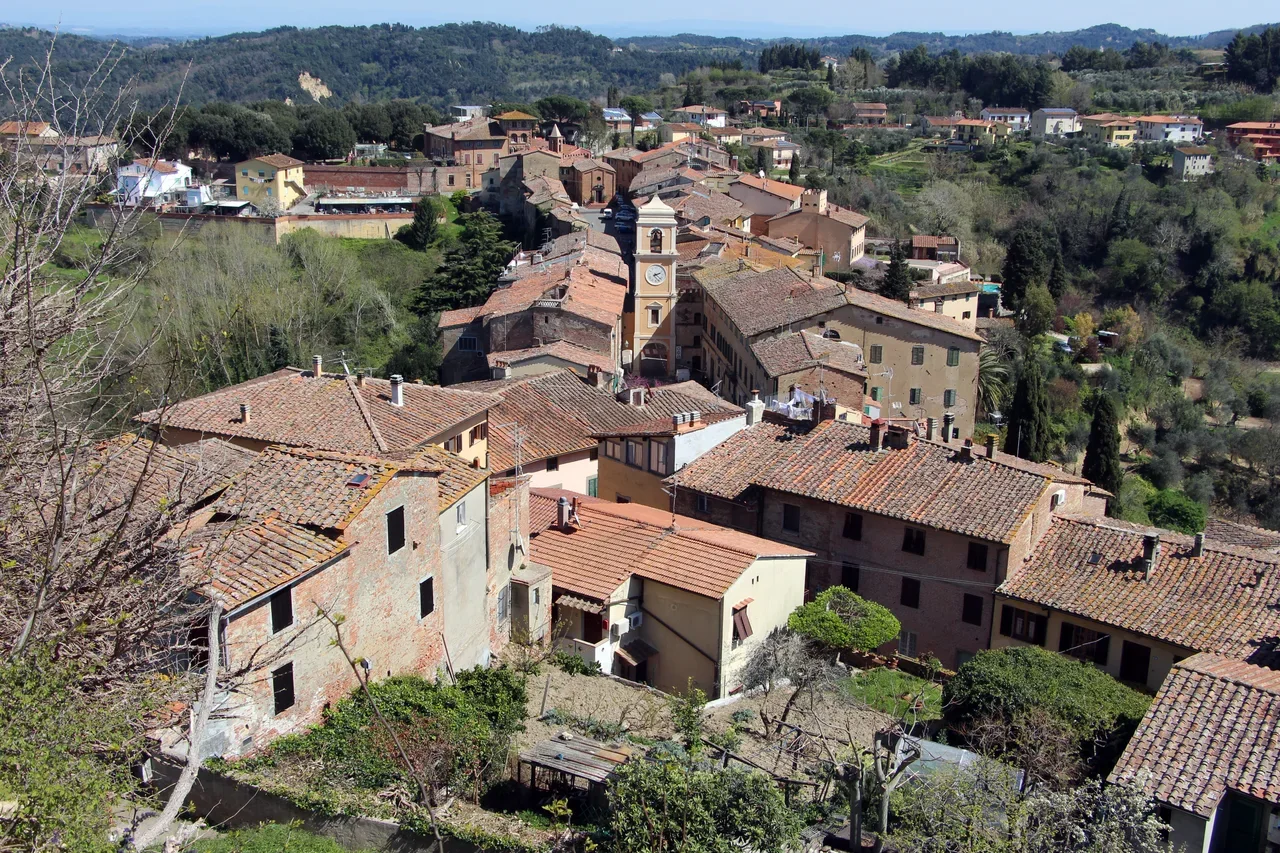
Palaia, in the hills of the province of Pisa, offers a starting point. Savini’s presence here forms part of WCE’s editorial focus. The family and municipal sources connect searching, selecting and transforming. Following that relationship gives depth to an ingredient so often introduced through aroma, rarity or price alone.
Knowing how to search
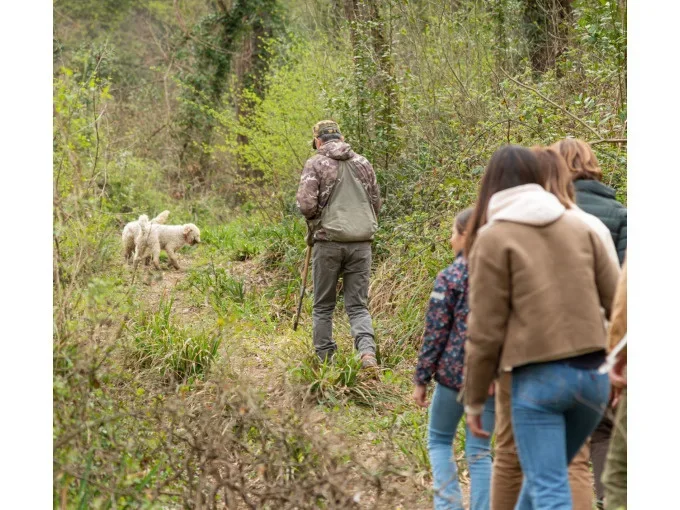
A truffle is the fruiting body of a subterranean fungus. That fact explains some of the fascination of the search: the work involves reading signs and attending to what remains out of sight. Hunter and dog develop a relationship of learning. Knowing a place, directing attention and caring for the ground belong to the same craft.
In 2021, UNESCO inscribed the knowledge and practices of truffle hunting and extraction in Italy on its intangible cultural heritage list. The recognition concerns the transmission of knowledge and the relationship between people, animals and environment. It belongs to an Italian cultural practice, rather than to an individual business or tourism activity.
This kind of attention deserves time. Someone accompanying a search can begin with the way the work unfolds: when to move, when to wait, how to follow the dog and how a gesture in the soil is brought to an end. Such questions bring the visitor closer to a process and shift attention from a trophy to the knowledge involved.
One ingredient, many hands
Savini describes its history as a family continuity spanning four generations, rooted in the 1920s. That account, told by the business itself, adds a human dimension to the ingredient. Something that begins hidden then passes through different hands: those who search, select, transform, cook and welcome others at the table.
Thinking about this chain changes the questions we ask. How is a good ingredient recognised? What care does it require between gathering and cooking? What is preserved through a family’s experience, and what changes as the product reaches other markets? Gastronomy gains depth when these decisions enter the conversation beyond the moment of serving.
The woodland belongs to a particular geography, too. Palaia and the surrounding hills have names, paths and uses of their own. Locating the truffle within that context lets us encounter a region through its work. Landscape begins to participate in the meaning of what is tasted, extending beyond its role as a photograph’s background.
Reaching the table with renewed attention
In the kitchen, the ingredient meets another set of choices. The thickness of a cut, the temperature of a preparation and the place given to one flavour within a whole can be read as decisions. Readers can retain that curiosity: what is being brought forward, what accompanies it, and what needs room to be noticed?
Between woodland and kitchen, recognising an ingredient means learning to ask different questions. During the search, attention follows the signs that guide the work; at the table, it considers how a preparation gives them room to be noticed. Moving between these contexts turns an ingredient into a relationship between knowledge, care and hospitality.
The relationship can continue after a meal. Remembering an explanation, trying to understand a gesture or returning to a question brings discovery closer to daily life. Aroma may be the first memory; attention to the work gives it company. Curiosity remains active when it finds something still worth learning.
Perhaps the most useful question to carry away from the woodland is simple: what work are we still unable to see when an ingredient reaches the plate? Continuing to look for it is one way to sustain an encounter with Tuscany.
Sources & reading
Text: World Cooking Experience. Editorial essay informed by the sources below and the house’s 2026 preparatory archive.
- Savini Tartufi ↗
- Palaia is Toscana — portal promovido pelo Comune di Palaia ↗
- Visit Tuscany — site oficial da Toscana ↗
- UNESCO — Património Cultural Imaterial ↗