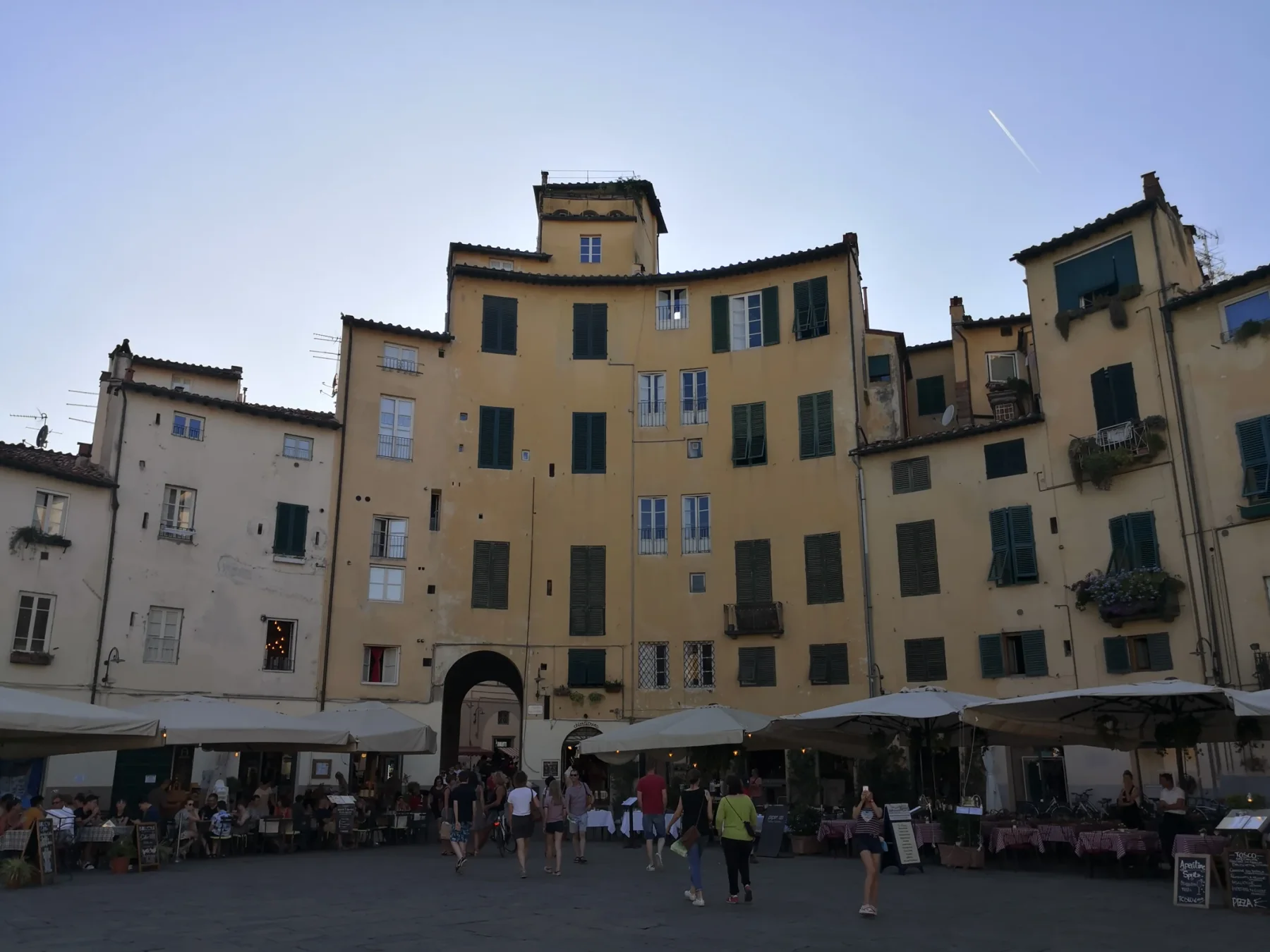
A city takes on another measure when we follow the relationships between its spaces. A passage leads to a square; a façade meets the movement of a street; a place to pause invites another look. Lucca offers material for this kind of reading, in which heritage participates in everyday life and the table can extend what began along the way.
L’Eccellenza brings the city’s human scale into conversation with Ristorante Giglio. The relationship matters for the questions it sets in motion: how can present-day cooking occupy a place with memory? Which forms of hospitality help a city remain recognisable as it welcomes new interpretations?
A city that uses its memory
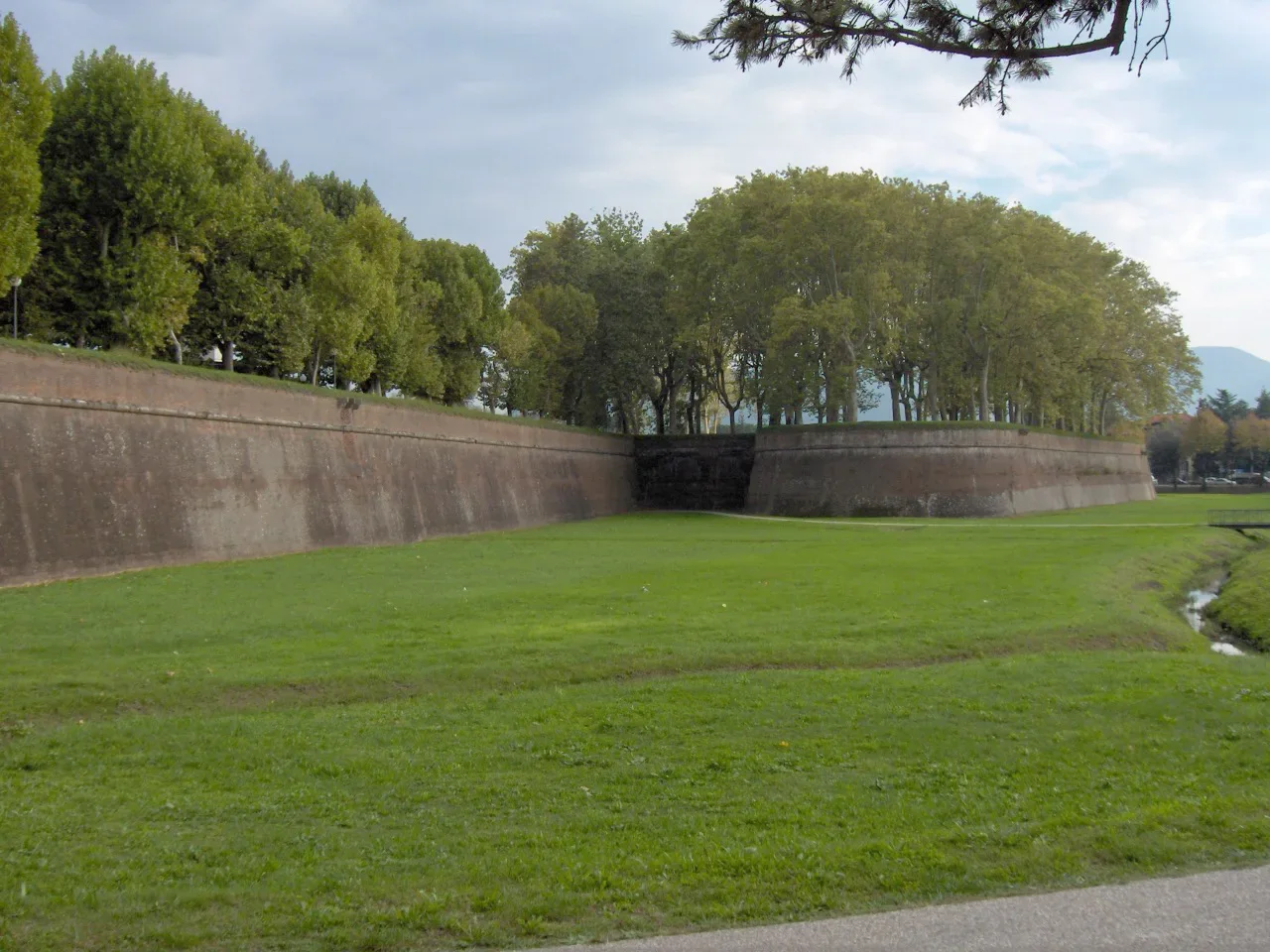
Lucca’s municipality dates the current walls from the sixteenth to the mid-seventeenth century and describes their conversion into an urban promenade in the early nineteenth century. This change of use offers a key to the city. A defensive structure becomes part of a culture of walking, resting and meeting.
Memory becomes an experience of use. Someone can recognise a construction’s thickness while walking in shade, noticing a tree or meeting a friend. The place continues to produce relationships. History acquires a nearby presence when we see how an old structure welcomes habits from other periods.
Carrying this attention into the city changes what we look for. A square can be read through the way it brings façades and people together. A pause helps us recognise scale, sound and movement. The reading becomes personal because each detail meets the time we give it.

The present finds a place at the table
Giglio stands in Piazza del Giglio, Lucca. In WCE’s Tuscan manuscript, the restaurant has the role of the journey’s first major gastronomic table. That position connects an introduction to the region with a conversation about contemporary cooking and ways of welcoming.
A public document helps locate that conversation in time. In October 2024, announcing its Ristoratori dell’Anno award for the 2025 guide, Gambero Rosso identified Benedetto Rullo, Lorenzo Stefanini and Stefano Terigi and discussed hospitality and a change of language at Giglio. This dated portrait allows us to recognise one stage in the restaurant’s development.
The editorial question can bring cooking and continuity closer. What does a house choose to simplify? What attention does it give to conversation? How do room, service and plate build a relationship with a guest? Contemporary thinking can be sought in these decisions, beyond the image of novelty.
Memory open to the present
A building, a city and a kitchen keep different rhythms. Stone may remain for centuries; a team works at a particular moment; a dish belongs to a season and a decision. Bringing these durations together reveals hospitality as work that connects different times.
For readers and visitors, this suggests a generous attention to change. A historic city can provide stable reference points while receiving new ways of cooking. Interest lies in how these layers meet and which choices make continuity perceptible without requiring stillness.
The table extends a walk because it also asks for presence. There is a way of listening to a space and another of noticing what a meal allows between people. In both, a concrete detail may open a broader reading: the distance between chairs, care in an explanation, a pause that allows conversation to find its rhythm.
Lucca remains in this issue as a question about hospitality. What deserves to be kept in a city, and how much room do we give to those who continue making it? Returning to the table can be a way of continuing the answer.
Sources & reading
Text: World Cooking Experience. Editorial essay informed by the sources below and the house’s 2026 preparatory archive.
Image credits and editorial note ↗