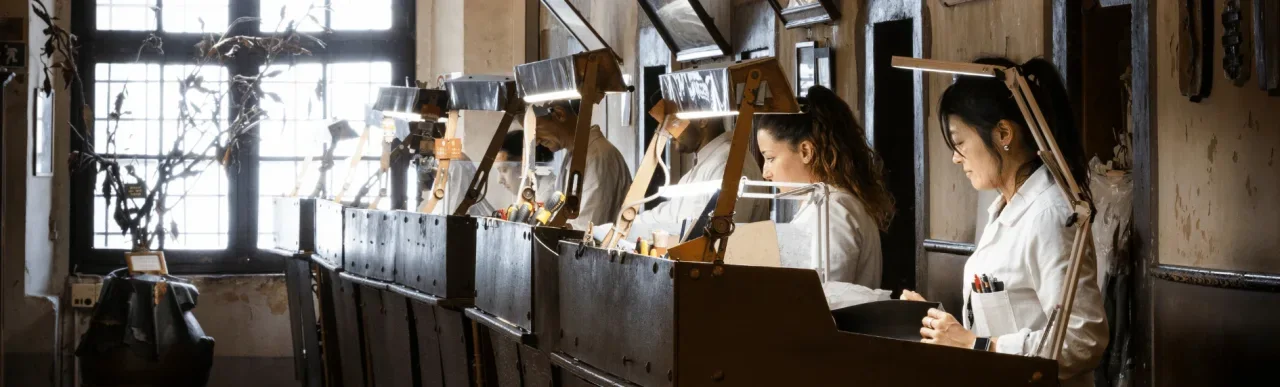
A workbench invites a different scale of attention from a façade. The eye comes closer to a surface, a tool, a movement. Entering Florence at this scale connects the monumental city with the work that continues inside it. Material offers a path towards recognising people, techniques and ways of passing knowledge on.
WCE’s Tuscan focus brings together three places with distinct functions: Scuola del Cuoio, Santa Maria Novella and the market. Leather, fragrance and food can converse within one reading while retaining their own histories. The connection lies in the questions a visitor carries: who knows how to make, how did they learn, and which choices make the result recognisable?
The time of a workbench
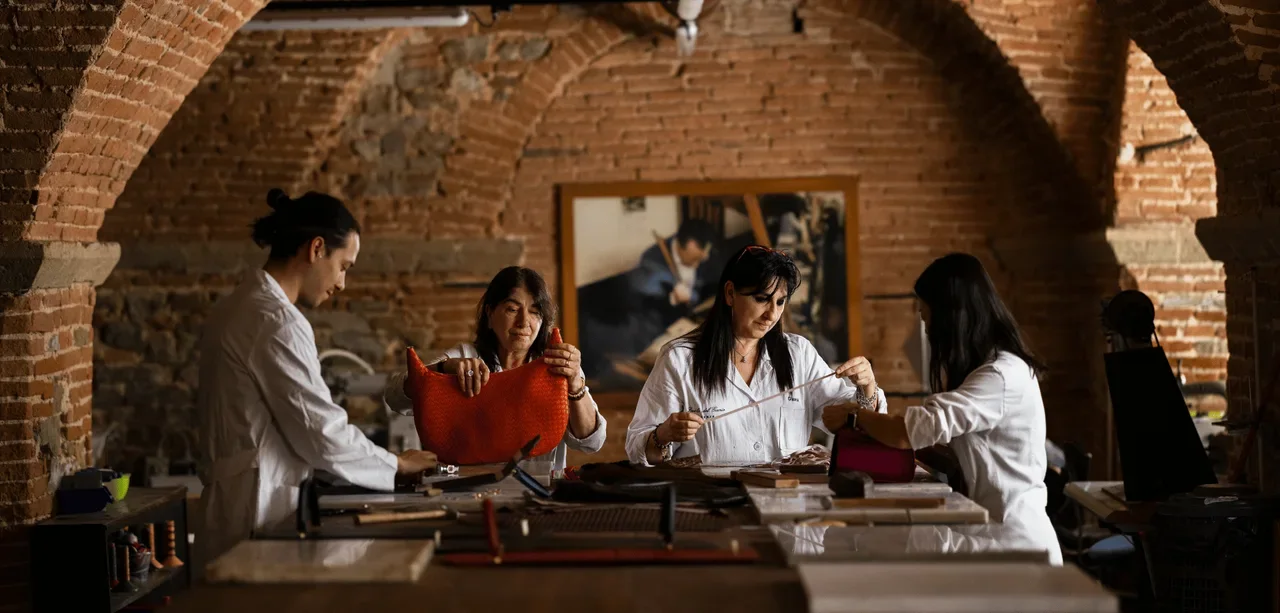
Scuola del Cuoio locates its origins after the Second World War. The initiative brought Franciscan friars from Santa Croce together with artisan families to teach a trade to war orphans. This beginning helps explain the school as a place of learning and continuity within a setting with a much older history.
A visit guided by craft can begin with the relationship between hand, tool and material. Where is attention concentrated? Which part of a gesture depends on repetition? How is a correction passed to a learner? Quality becomes a concrete question when we approach what someone does, extending our interest beyond the completed object.
Manual work also gives another measure to a city’s time. One space can preserve old architecture while meeting the needs of a later period. The past remains in use through decisions made in the present. Recognising these layers allows us to follow how a place continues to be learned, alongside its styles and dates.
Vessels, gardens and memory
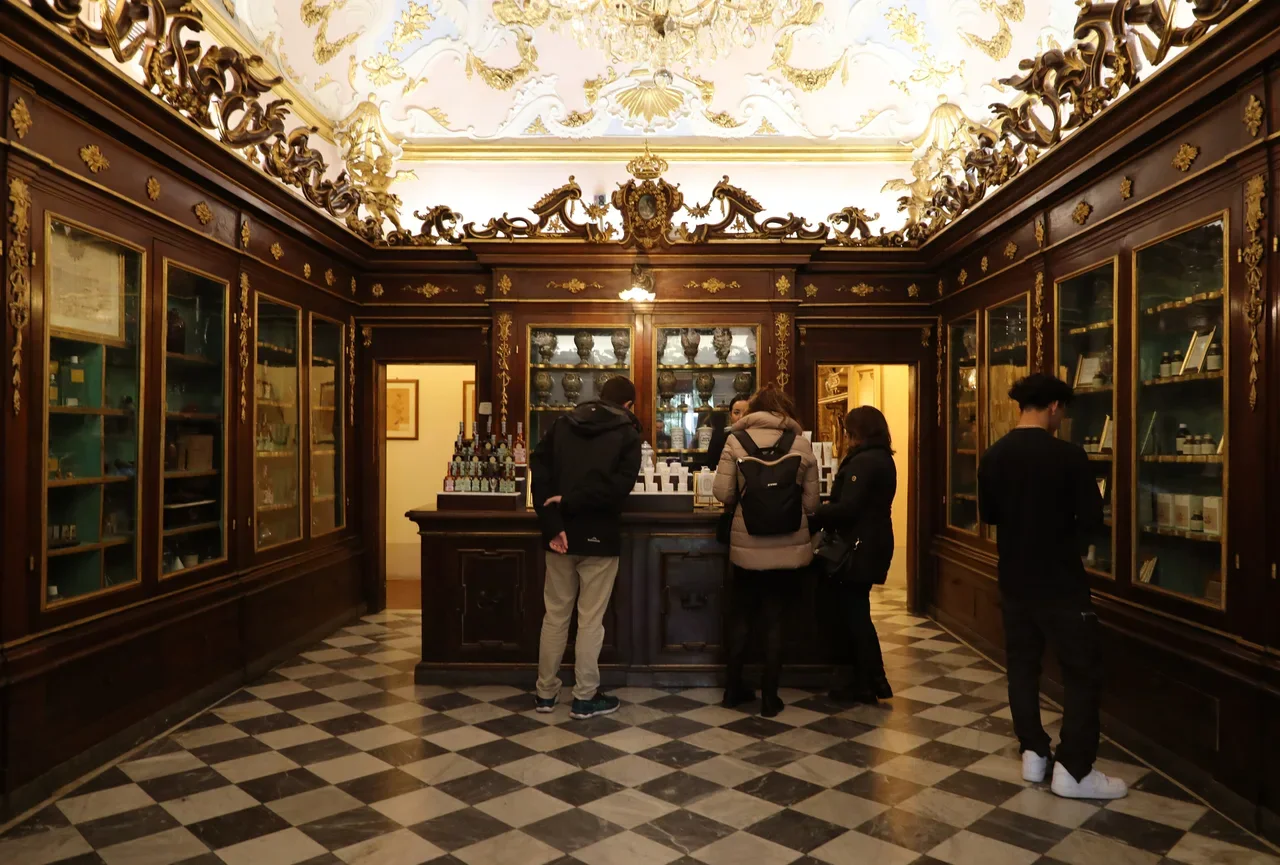
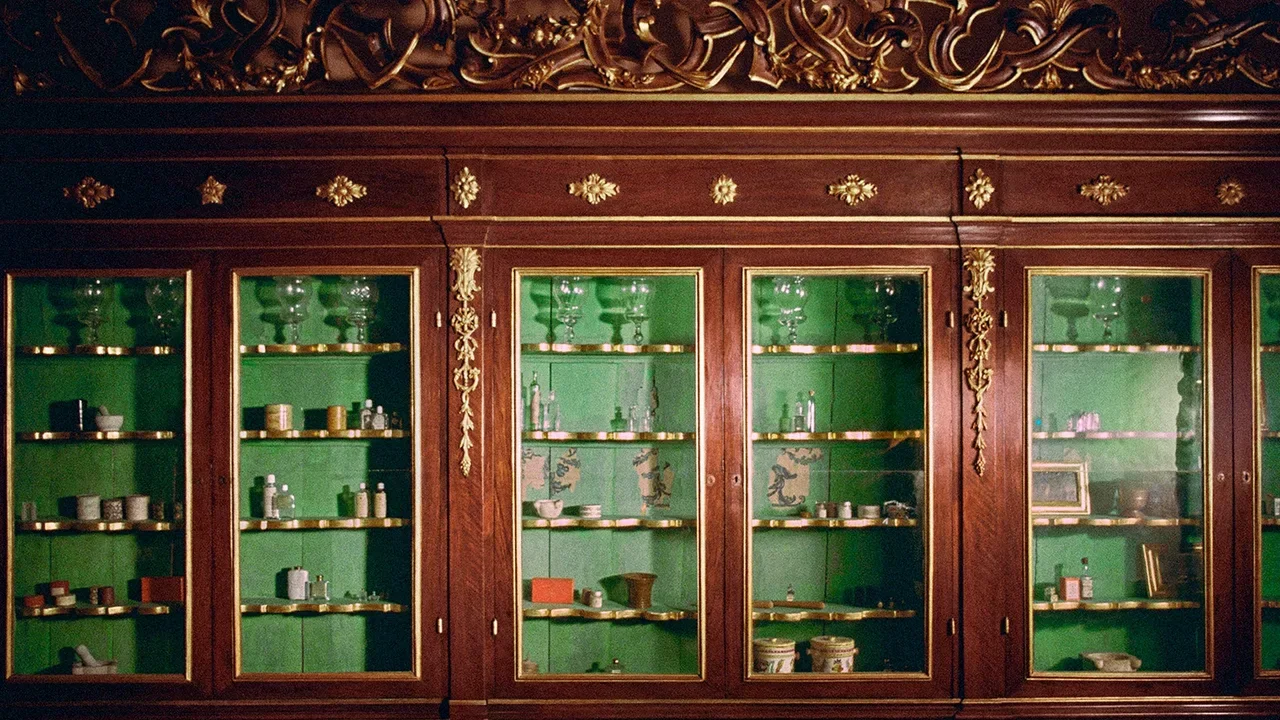
Santa Maria Novella’s historical account distinguishes the convent founded in 1221 from the pharmacy’s opening to the public in 1612. The house connects gardening, preparation and preservation. In the Antica Spezieria, cabinets, vessels and instruments offer a reading of material culture in which storing and measuring belong to making.
One simple question can open that reading: what does a vessel reveal about the care given to a material? Shape, scale and arrangement influence how work is done. The preserved setting offers a chance to consider how useful objects acquire memory when they remain connected to the functions that gave them meaning.
The development of perfumery extends the conversation about identity and transformation. A material can be selected, combined and presented in different ways. Readers can approach through this attention to process, leaving room to distinguish the history told by the house from their own encounter with a fragrance.

A city that feeds itself
The market adds food and circulation to the reading. Mercato Centrale distinguishes its first-floor food project, opened in 2014, from the iron-and-glass building of 1874. Recognising both layers keeps the historic market, its neighbourhood and the contemporary proposition from being compressed into a single image of continuity.
The botteghe offer another place to ask about work. How is an ingredient chosen and presented? What relationship exists between those who prepare and those who eat? The market can be read through this proximity, attending to the operations that make food available and the people who sustain the city’s daily conversation.
A workbench, an apothecary and a table become connected through a way of looking. Each place offers something to notice before reaching a conclusion: care, hesitation, a decision or a relationship between an object and its surroundings. Curiosity becomes more precise when it gives these details time.
The Florence made by hand continues through what a person learns to recognise. Keeping a question about work can matter as much as keeping an image of an object. It is a way to carry the city into another reading.
Sources & reading
Text: World Cooking Experience. Editorial essay informed by the sources below and the house’s 2026 preparatory archive.
- Scuola del Cuoio ↗
- Officina Profumo-Farmaceutica di Santa Maria Novella ↗
- Officina Profumo-Farmaceutica di Santa Maria Novella ↗
- Mercato Centrale ↗